
Table of Contents
- What Makes Polyester Jackets a Practical Choice?
- Why Cotton Jackets Stand Out for Comfort and Style
- Polyester vs Cotton: How Do the Materials Compare?
- Which Fabric Works Better for Different Weather Conditions?
- Choosing the Right Jacket for Your Everyday Lifestyle
- Polyester or Cotton: Which One Should You Buy?
- Can You Get the Best of Both Fabrics?
- Find the Fabric That Fits Your Lifestyle
- FAQ’s
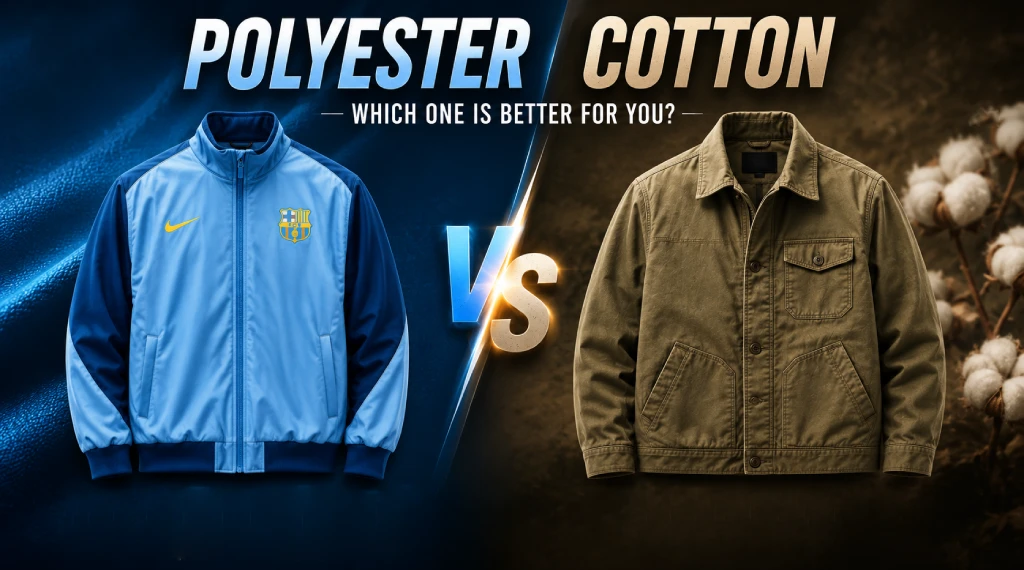
Six in the morning, and the sky can’t decide if it’s spring or October. You grab two jackets off the rack and stare at them as they owe you an explanation. That moment is really what Polyester vs Cotton Jackets comes down to: comfort, durability, weather protection, and upkeep all trace back to what the fabric is made from, and the right answer usually depends less on trends and more on your climate, your routine, and how much fuss you want to deal with on a Tuesday morning.
What Makes Polyester Jackets a Practical Choice?
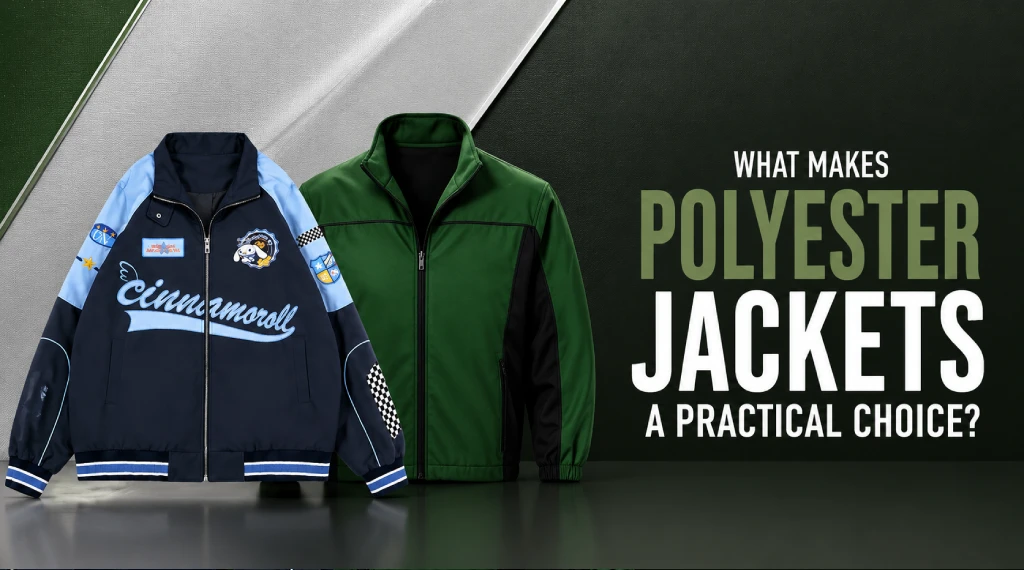
Polyester Jackets earn their place in a closet through sheer usefulness. Rain slides off them instead of soaking in, wrinkles don’t stick around, and a quick air-dry is often all they need after a downpour. Because the fibers are synthetic, they hold their shape wear after wear, staying light even when the build feels sturdy.
The FC Barcelona Strike Fourth Nike Anthem Blue Polyester Jacket shows this off on match day, when fans need something that survives crowds, weather, and hours of standing without wilting. The Women Blue Cinnamoroll Polyester Racer Jacket takes a different approach: the playful print gets to shine on a shell that still holds up through an actual bike commute, with a fitted sleeve and a snap collar that keeps wind off the neck.
Then there’s the Kevin James Playdate Green Polyester Jacket, tied to Brian Jennings’ look in the 2025 Prime Video comedy about a laid-off accountant dragged into a mercenary chase during what should’ve been a quiet afternoon playdate. A jacket built for that kind of chaos needs to look ready for anything. And polyester handles that brief without much trouble.
Why Cotton Jackets Stand Out for Comfort and Style
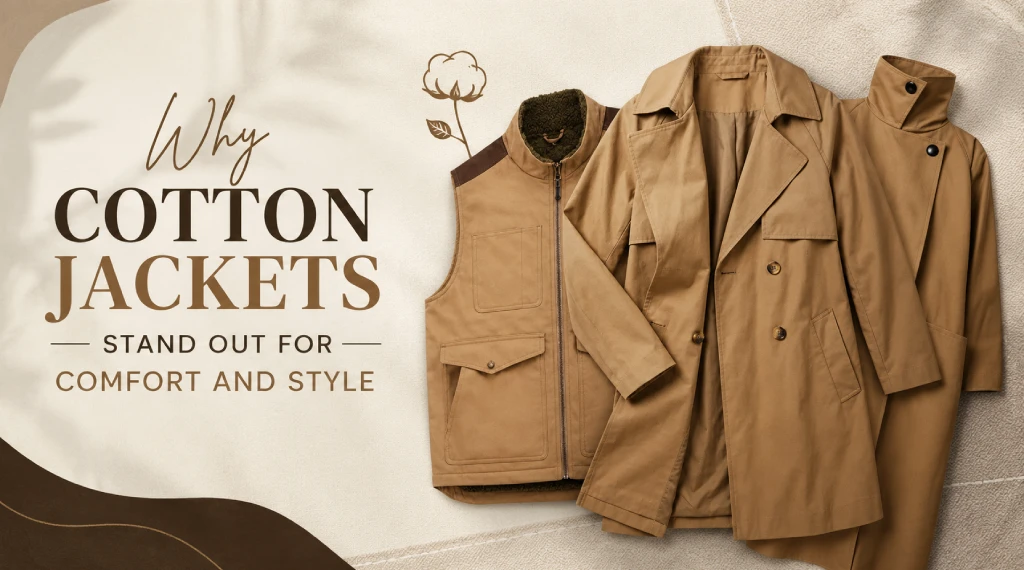
Cotton Jackets take the opposite approach. Rather than blocking the elements, they let skin breathe and get softer with every wash, which is a big reason cotton dominates casual and transitional-season wardrobes. The fibers feel warm without trapping heat, and the fabric ages into something better instead of just wearing out.
The My Life with the Walter Boys S03 Johnny Link Cotton Vest borrows from Will Walter’s ranch-ready wardrobe in Netflix’s Silver Falls, Colorado, where season three picked back up right after George Walter’s medical emergency. Katherine Walter’s grounded, no-fuss style comes through in the My Life With The Walter Boys S03 Sarah Rafferty Cotton Jacket, especially through a season that put the whole family through the wringer.
Outer Banks fans get their own picks, too. Chandler Groff’s look inspired the Outer Bank S05 J. Anthony Crane Cotton Jacket, tied to the show’s final season.
While the Outer Bank S05 Madison Bailey Camel Tan Cotton Coat channels Kiara’s determined hunt for the Blue Crown.
Even outside pop culture ties, the Aurore Oversized Cotton Trench Coat proves cotton’s softness works just as well for an ordinary day of layering.
Polyester vs Cotton: How Do the Materials Compare?
Comfort comes down to touch, and cotton wins that round from the first wear; it’s simply the more breathable fabric against your skin, while polyester usually needs a smooth liner to close the gap. Durability tells a different story. Thanks to its synthetic fibers, polyester resists abrasion and holds up to years of daily wear. Giving it an edge in jacket durability that natural fibers like cotton just can’t match long-term.
Moisture resistance is where that fabric performance really shows. Rain beads off a polyester shell instead of soaking through. So you get real weather protection without the extra bulk. Ideal for lightweight outerwear you can throw on and forget about. Cotton soaks up water instead and takes its time drying out. Which becomes an issue if you’re stuck in a downpour without a bag to stash it in.
Warmth shifts with the season too. Polyester traps body heat efficiently when it’s cold and dry, though it can feel a bit clammy once humidity climbs. Cotton breathes better in mild weather but loses some insulating power once it’s wet. Maintenance leans in polyester’s favor overall; a quick wipe-down keeps it fresh, while cotton often asks for more attention, whether that’s ironing or an occasional trip to the dry cleaner.
Feel and appearance really just come down to preference. Polyester leans modern and technical, while cotton carries a texture that only gets better with age.
Which Fabric Works Better for Different Weather Conditions?
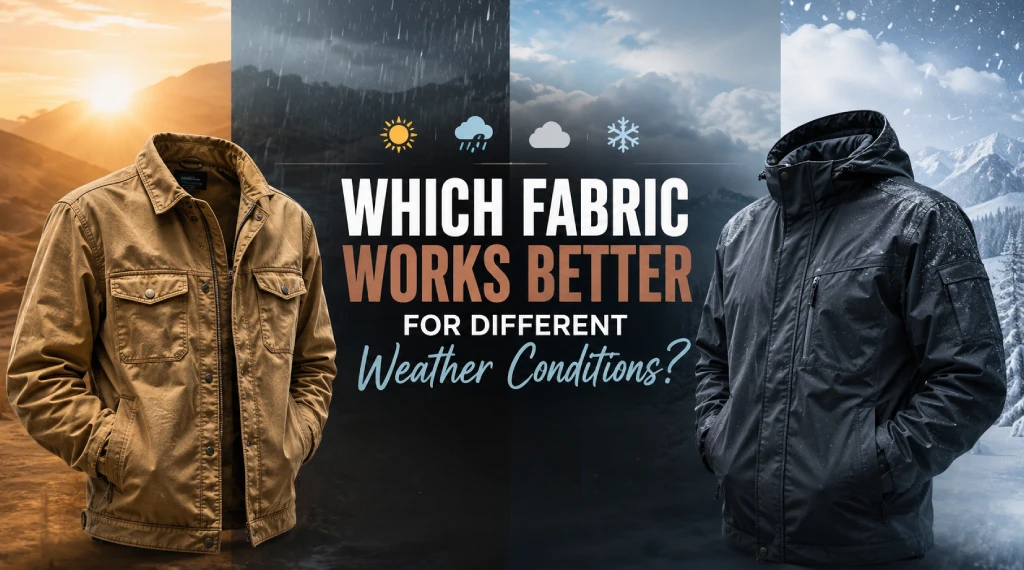
Weather tends to settle the argument on any given day. In warm, humid climates, cotton’s breathability keeps you from overheating, although it can feel heavy once sweat sets in, and polyester’s moisture-wicking properties often perform better if you’re active outdoors in the heat.
Mild, transitional weather comes down to activity level more than anything else: cotton for a relaxed day, polyester for anything involving real movement. Cold, dry conditions reward polyester’s insulation and wind resistance, particularly when it’s layered over a base piece.
Light rain and damp air are polyester’s clearest strength, since water resistance means skipping the extra gear altogether. If you’re layering through shifting temperatures instead, cotton’s flexibility as a mid-layer usually wins out, and a cotton flannel under a polyester shell can cover nearly every seasonal swing you’ll face.
Choosing the Right Jacket for Your Everyday Lifestyle
Daily routine says more about the right jacket than any forecast does. Commuters benefit from polyester’s wrinkle resistance on unpredictable transit days, and the same durability makes sense for hiking or biking. Something like the Mens Black Quilted Polyester Coat fits right into that rotation, it layers well over office clothes without needing a steam session every morning.
Casual streetwear leans toward cotton’s relaxed drape, the kind that pairs easily with jeans and sneakers, while travel usually favors polyester, since it packs light and skips the wrinkles a suitcase tends to cause. Game-day regulars get their own lane too, and something like the Atlanta Falcons Grey Polyester Vest handles tailgate weather and a full day on your feet without complaint. Work and smart-casual dressing often split the difference, pairing a cotton jacket with tailored pants for something that reads polished without trying too hard.
Fashion-focused outfits tend to lean on cotton’s styling range, from oversized trenches to fitted jackets, although a polyester racer jacket like the Cinnamoroll style mentioned earlier proves synthetic fabric can hold its own on a night out, too.
Polyester or Cotton: Which One Should You Buy?
Go with polyester if durability, low-fuss care, and moisture resistance top your list; it just makes sense for an active lifestyle or weather you can’t predict. Cotton is the way to go if you want something soft, breathable and natural-feeling. Also, Cotton makes a nice casual fabric, especially when the weather is mild.
Quick Comparison:
| Feature | Polyester Jackets | Cotton Jackets |
| Comfort | Smooth feel; depends on fabric and lining | Soft, natural feel |
| Moisture | Usually dries faster and handles damp conditions better | Absorbs moisture and dries more slowly |
| Durability | Generally resistant to abrasion and repeated wear | Can be durable, depending on fabric weight and construction |
| Breathability | Varies by weave and construction | Generally comfortable in mild conditions |
| Wrinkle Resistance | Usually resists wrinkles well | More likely to wrinkle |
| Care | Often easier to maintain | May need more care, depending on the garment |
| Best For | Travel, active use, changing weather | Casual wear, mild weather, comfort-focused outfits |
| Overall Feel | Practical and easy-care | Soft, natural, relaxed |
Neither material solves every problem, which is really the point. If you’re heading out for a hike, polyester makes more sense. For coffee with friends on a mild afternoon, cotton may be the better choice. And if you don’t want to choose between the two, a blend can cover both sides.
Can You Get the Best of Both Fabrics?
Polyester-cotton blends sidestep the debate altogether. A cotton-polyester blend gives you the soft feel of cotton with the strength and easy care of polyester. It also helps keep wrinkles down while staying comfortable and breathable against your skin. You’ll spot this hybrid fabric a lot in everyday outerwear and transitional pieces, where comfort matters just as much as holding up over time.
Find the Fabric That Fits Your Lifestyle

The Oskar Jacket comes down to how you actually live, not whatever’s trending this season. Polyester’s your pick for durability and low-maintenance wear on busy, active days, while cotton gives you that natural softness and a broken-in feel that just keeps getting better with time. Neither one wins every category, and that’s exactly why the smartest closets have room for both. Next time the choice comes down to these two, let your climate and your routine make the call instead of the label. The jacket worth keeping isn’t the trendiest one. It’s the one you actually reach for on a rainy Tuesday.
FAQ’s
A: Polyester’s synthetic, so it resists moisture and holds its shape wear after wear. Cotton’s a natural fiber, it breathes better and feels softer against your skin, but it takes longer to dry out.
A: Honestly, it comes down to your routine. Polyester’s the better call for busy, unpredictable days. While cotton feels right for relaxed, casual wear where comfort matters more than heavy-duty durability.
A: Yep. Cotton-polyester blends are the best of both worlds: the soft feel of cotton and the easy care and durability of polyester. Which is exactly why cotton-poly blends are everywhere in everyday outerwear.